

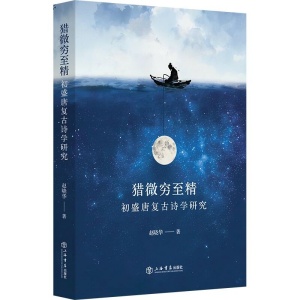
Editors-in-Chief: Zhao Xiaohua
Publication Date:December 2025
Publisher: Shanghai Bookstore Publishing House
ISBN: 9787545825381
Poetic archaism is a classic subject in the study of Tang dynasty poetry, and the poetic archaism of the Early and High Tang dynasties, represented by Chen Zi'ang, Zhang Jiuling, and Li Bai, constitutes a crucial focus within this field. This book makes further explorations based on existing scholarly research, employing the two concepts of "archaic style" (gufeng) and "archaist poetics" as its theoretical framework. Through a clarification of these concepts, the author confirms that the "archaic style" of these three poets differs from the general understanding of "ancient-style poetry" (guti). The author points out that these poets, with "the expressive and evocative power of the feng and ya tradition" as their core, traced their lineage from the Han and Wei dynasties back to the Book of Songs, forming a systematic archaist poetics. They vigorously championed the spirit of "poets of the archaic style," taking "the expressive and evocative power of the feng and ya tradition" as their fundamental creative ethos. They regarded "subtle and profound evocative expression" along with an aesthetic of moral vigor (fenggu) as the ultimate artistic goals. In terms of form, they broke away from the parallel prose conventions prevalent since the Qi and Liang dynasties, revitalizing and expanding the artistic potential of prose style. Through meticulous and in-depth analysis of the three poets' theoretical propositions and poetic works, the author argues that their poetics embodied their ideal of a kingly way in governance, representing a form of poetry that closely integrates the art of poetry with the vocation of the scholar-official. This, the author contends, fully demonstrates the enduring vitality of Confucian poetic tradition.
